CRADLE Lab has a long history of applying complex systems approaches for science education with both teachers and students. Our projects have included the creation of cutting-edge professional development programming for teachers, the design of novel high school science curricula and lessons, and the generation of new extracurricular learning experiences for students. A complete list of projects can be found below.
Current Projects
CRADLE Lab is currently engaged in two large-scale NSF-funded research projects. “Developing Teachers' Epistemic Cognition and Teaching Practices for Supporting Students' Epistemic Practices with Scientific Systems” (DeTECT) aims to support the development of teachers’ epistemic instructional repertoires to support growth in students’ epistemic knowledge and practices using models of complex systems. “Professional Development Supports for Teaching Bioinformatics through Mobile Learning” aims to promote computational and scientific action in local urban communities through the collection and analysis of bioinformatics data.

Professional Development Supports for Teaching Bioinformatics through Mobile Learning (K-12 Bioinformatics)
The major goal of the project is to co-construct and field-test multidisciplinary high school lessons organized around bioinformatics concepts through existing educational research. The lessons engage students in real-world data collection to investigate air quality issues and their relationship with asthma by using a mobile phone and sensors to collect local data in students’ neighborhoods (e.g., particulate matter 2.5 and carbon monoxide). These lessons are anchored in culturally meaningful learning, real-world inquiry, data literacy, contextualization with mobile technology, and cognitively-rich pedagogies through problem-based learning (PBL).
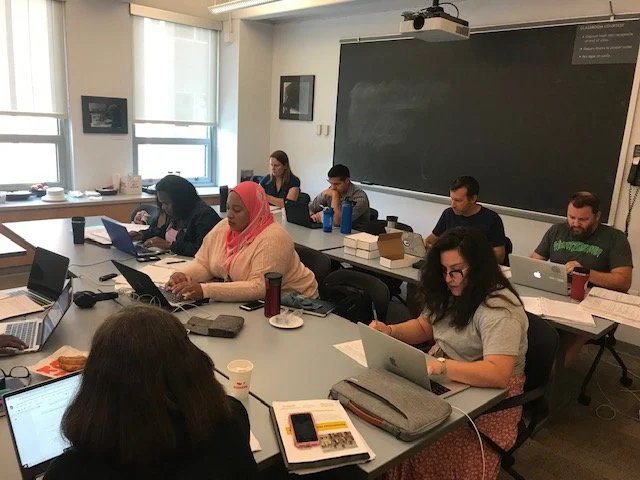
Over the course of this project, we have: (a) designed an entirely novel bioinformatics curriculum for high school students; (b) partnered with teachers to enact that curriculum with hundreds of high school students from a diverse set of partner schools; (c) run a variety of in-person and online workshops with 15 high school science teachers in the greater Philadelphia area; (d) constructed and delivered a fully online professional development (PD) experience using edX; and (e) designed new methods for teacher training that promote teacher pedagogical content knowledge for data literacy and resource activation.
K-12 Bioinformatics is funded by the NSF Discovery Research K-12 program. More information can be found here.
Related Projects
DeTECT: Developing Teachers’ Epistemic Cognition and Teaching Practices for Supporting Students’ Epistemic Practices with Scientific Systems
The ultimate goal of DeTECT is to support the development of students’ epistemic practices and cognition while promoting their interest and skills in investigating and evaluating scientific phenomena. To accomplish this goal, we are constructing, delivering, and pilot testing a high-quality teacher professional development program using complex systems curricula and agent-based simulations that promote teachers’ ability to recognize and strategize ways to develop their students’ epistemic cognition.
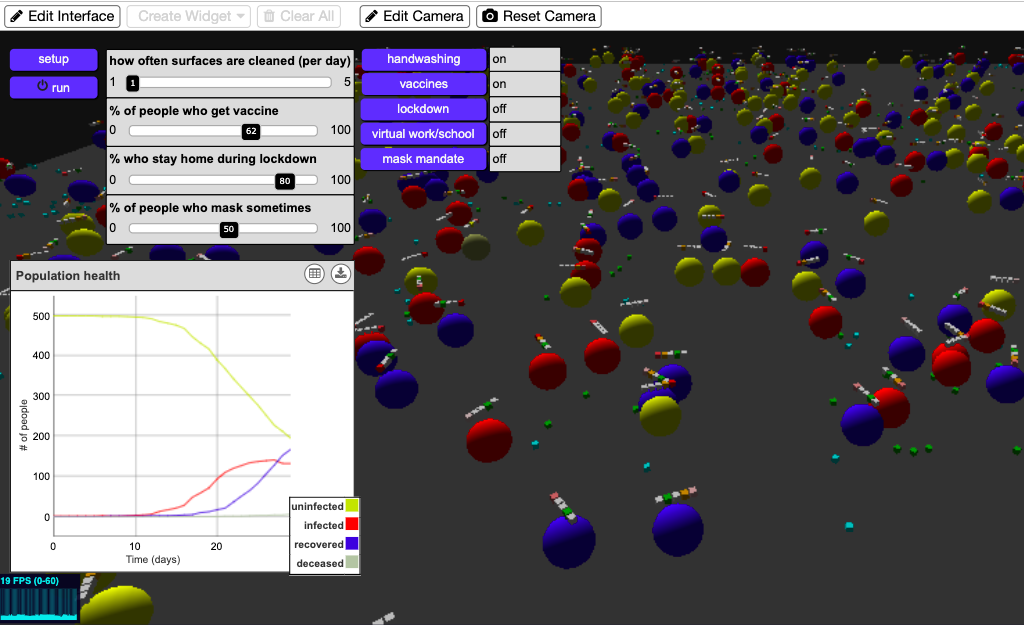
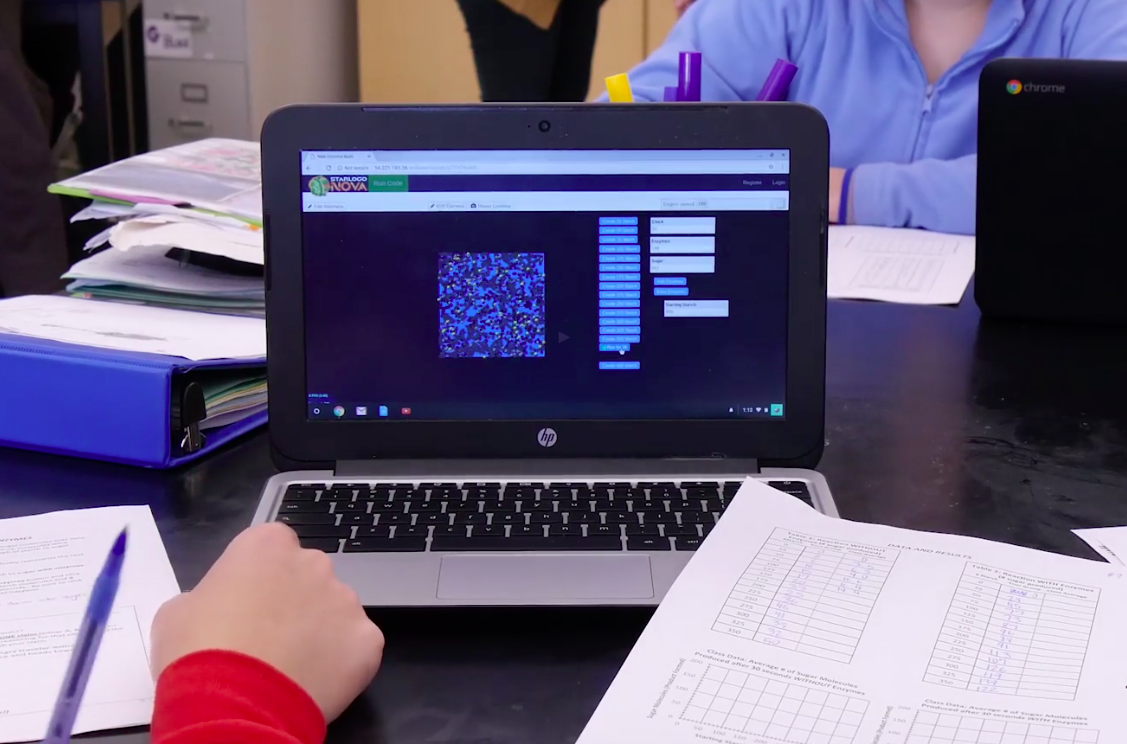
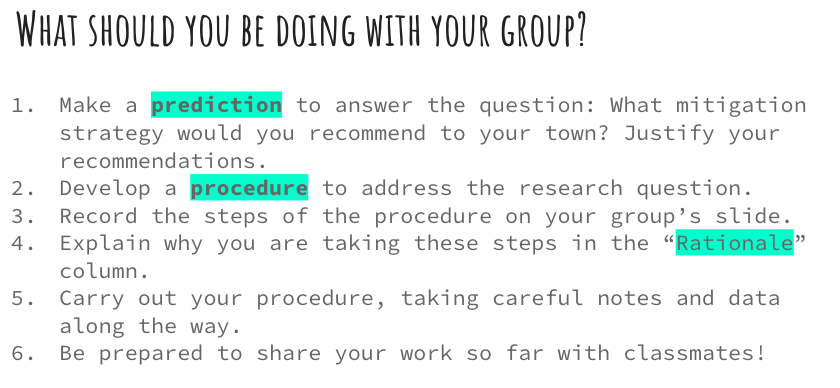
Over the course of this project, we have: (a) run a variety of in-person and online workshops with 12 expert partner teachers from the USA, India, and Kenya; (b) designed novel PD resources to support the integration of opportunities for robust and authentic epistemic practices inside real-world classrooms; (c) developed a new complex systems curriculum and agent-based simulation on StarLogo Nova to engage students in a realistic pandemic investigation; (d) adapted an existing complex systems curriculum (see: BioGraph in the “Past Projects” page) to promote additional opportunities for students to engage in meaningful epistemic practices and to more directly incorporate socioscientific issues (SSIs); and (e) supported the implementation of these new curricular resources with hundreds of students across the globe.
DeTECT is funded by the NSF Discovery Research K-12 program. More information can be found here.
| Improving Teacher Epistemic Performance | |
|---|---|
| Project | Description |
| Instructional Epistemic Frames | Goal. Population. Result/Impact |
| Epistemic Disagreement | Goal. Population. Result/Impact |
Doesn’t have to be these colors but this is what I was thinking one option for overall layout could be (we can adjust font sizes too) - Claire
Related Projects
CRADLE Lab has conducted a wide range of research projects funded by NSF, the Milken Foundation, the Lenovo Foundation, and other institutions. These projects include (among many others): BioGraph—Graphical Programming for Constructing Complex Systems Understanding in Biology; BioGraph 2.0—Professional Development for High School Biology Teachers for Teaching and Learning About Complex Systems; App Inventor for Socioscientific Issues to Build Engagement in STEM, and Nanotechnology and Bioengineering in Philadelphia Public Schools; and SPARK—Igniting Interest and Achievement in STEM through Engineering Design.
Past Projects
Other Projects
A Penn-West Philadelphia/Philadelphia Public School Partnership to Develop Innovative and Sustainable Ways for Technology to Positively Impact Learning (Lenovo Foundation, 2011-2012)
Headstart to High School Science in West Philadelphia Schools, a summer project focused on socioscientific issues for middle school students (Lindback Foundation, 2006-2008)